Vaccines · India and the United States · 2020
GSK: five minutes to answer, so I ran a survey first
SECTOR
Vaccines
MARKET
India and the United States
COMPANY
GSKROLE APPLIED FOR
Senior Innovation Specialist
DATE
January 2020
The situation
Adult vaccination coverage in India was, at the time, close to negligible.
Childhood immunisation had improved enormously over two decades. The same person at fifty-four had usually never been offered anything, and often believed vaccines were a children's product.
I was given two problems and ten minutes of airtime to answer both, five minutes each, inside a forty-minute panel. Five minutes is enough to present one thing you did beforehand. So one problem got primary research and a working prototype, and the other got an argument against the idea the panel had handed me.
01 · What this engagement produced
9 of 34 outputs
9 of the 34 outputs, across five of the six stages.
4 not produced
Win / loss, Market report, Why now, Assumption log
3 not produced
Positioning, Packaging and pricing, Deck spine
4 not produced
Messaging framework, Claim check, Landing page review, Message drift
6 not produced
Launch tiers, Channel and funnel, Product Oracle, Sales enablement, FAQ, Release notes
5 not produced
Product funnel metrics, Launch post-mortem, Trust metrics, Customer case studies, Half-Life Map
Solid is what the brief produced. Dashed is what it did not reach, and could not from outside.
02 · The decision
The stated problem was hesitancy. The data said providers were not asking.
The brief was explicit about why adult vaccination rates are low: low awareness of adult vaccines, and a hesitant attitude built on the belief that vaccines are for children. Both are real, and both showed up in the survey.
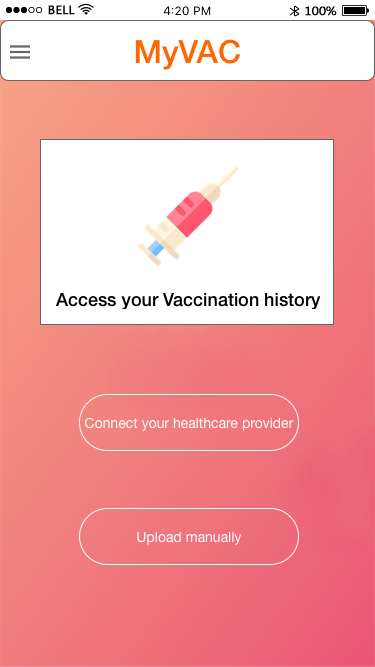
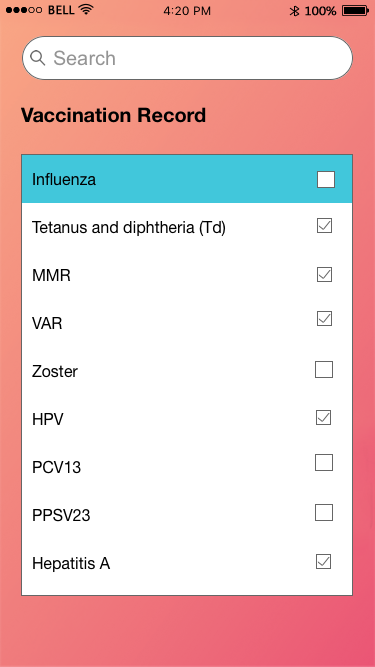
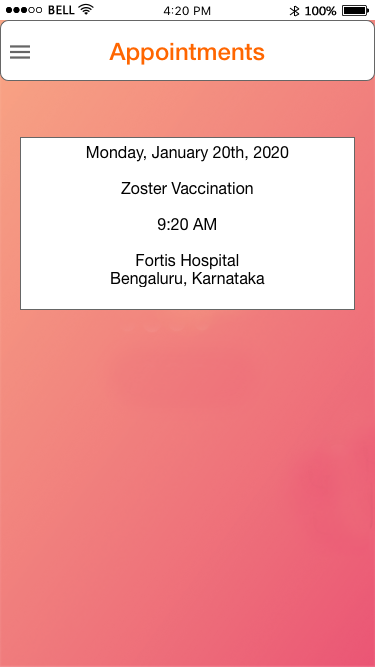
But the number that reframed the problem was a different one. Twenty per cent had received a recommendation from their own healthcare provider. Their provider had never asked four in five people. Hesitancy is a persuasion problem and you solve it with a campaign. A provider who never asks is a workflow problem, and you solve it inside the provider's system: recommendation prompts, recall, standing orders, and a financial reason for the hospital network to run them.
Which is why the answer was an app plus a set of things that are not an app, and why the customer journey marked the points only the hospital networks could fix.